



The last patient leaves at 5:40, the clinic goes quiet, and the physician is still typing. Nine encounters, nine notes, and a short list of orders that never made it into the chart while the room was full.
This is the part of medicine that never appears in a job description, and it quietly became one of the longest shifts in healthcare.
There is finally evidence that the picture is shifting. Federal data on more than 8,400 family physicians shows substantial pajama time, meaning three or more hours of after-hours documentation per day, falling from 41 percent to 34 percent between 2024 and 2026.
That is genuine progress, and it still leaves a third of family physicians working evenings inside the electronic health record.
What changed is not that clinicians learned to type faster. Documentation began moving off the clinician’s plate altogether, handed to trained remote specialists, better templates, and ambient tools that listen to the encounter and draft the note.
The outcome is a different clinical workflow rather than a lighter version of the old one, and the way the pieces fit together is worth a closer look.
The Real Cost of a Note Written Twice
Most electronic health records were built to satisfy billing and compliance, not to capture a clinical story. So the clinician narrates the visit once to the patient, then reconstructs it a second time in boxes designed by someone who was not in the room.
Information that already sits somewhere in the chart gets re-entered, because pulling it forward is slower than retyping it.
The professional bodies that care most about record quality have been blunt about where this leads. AHIMA’s policy position on data quality names clinician burden and excessive documentation time as a direct barrier to accurate, complete records, not merely a staffing inconvenience.
A tired physician writing a note at 10 p.m. produces a thinner record than the same physician would at 2 p.m., and that thinner record follows the patient.
Patients feel the other half of the cost. When a clinician is typing, they are not listening with full attention, and people are good at telling the difference.
How Remote Documentation Support Works in Practice?
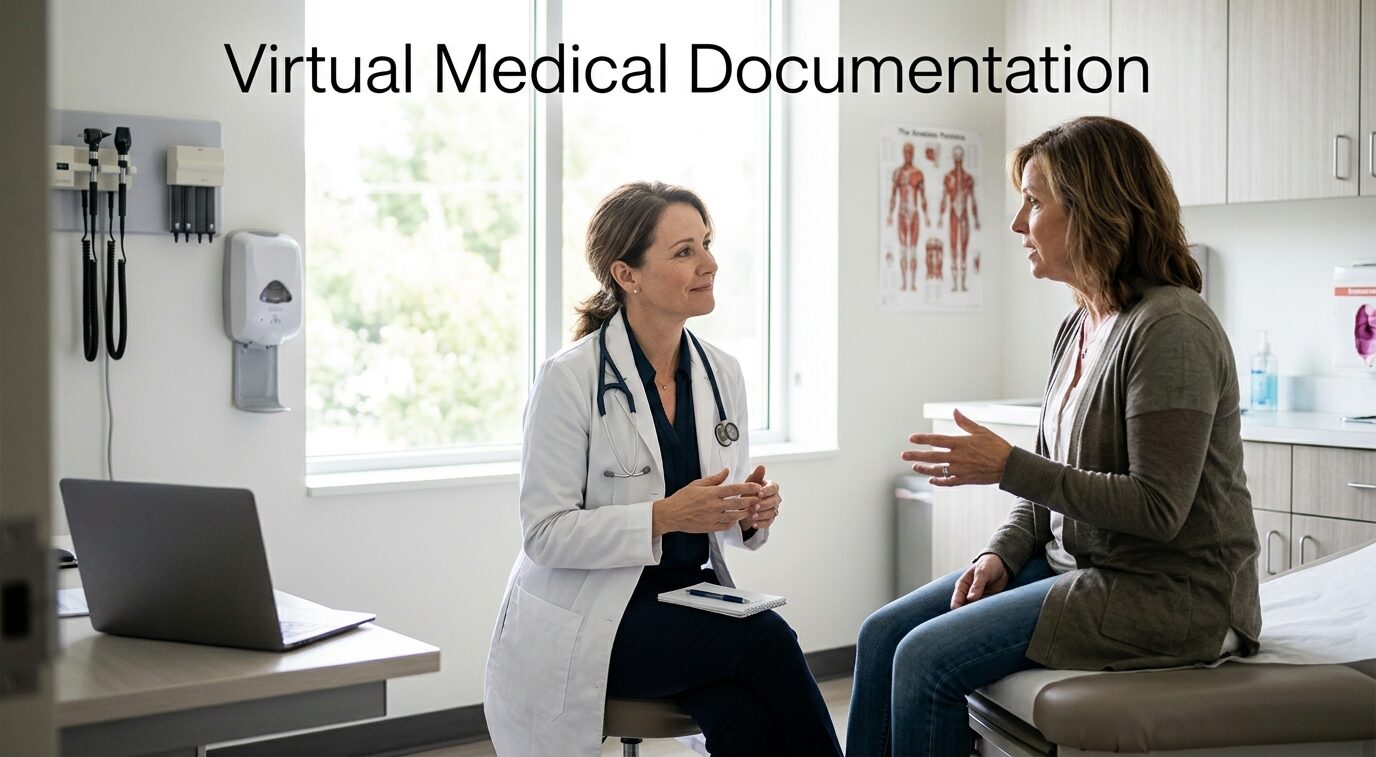
The model is simpler than it sounds. A trained documentation specialist joins the encounter remotely over a secure connection, builds the note in the EHR as the visit unfolds, and hands a draft to the clinician for review and signature. The clinician stays the author of the record. What changes is that they stop being the transcriptionist.
Good programs extend well past the note. Specialists pre-chart before the first appointment, pull prior results and outside records into a usable summary, queue orders and referrals for approval, draft patient instructions, and keep the inbox from turning into a second job.
Practices that want this capacity without building a department around it usually buy it, which is why virtual medical scribe services have become a standard line item rather than an experiment.
Scope matters more than headcount. A specialist who understands orthopedic terminology, or oncology staging, or the rhythm of a busy pediatric clinic saves far more time than a generalist who needs every abbreviation explained.
Where the Workflow Actually Gets Faster?
Three points in the day change first. During the visit, the clinician’s hands come off the keyboard, which shortens the encounter slightly and improves it considerably.
Between visits, the gap once spent catching up on the previous note becomes a gap that is actually available, so clinics stop accumulating the delay that makes a 4 p.m. appointment run forty minutes late.
The end of the day is where the difference shows most clearly. Notes drafted live get signed the same afternoon instead of sitting in a queue, and same-day chart closure has effects that are easy to miss: coding happens sooner, claims go out sooner, and colleagues covering overnight see a complete record rather than a placeholder.
The gains are not evenly distributed, and anyone promising otherwise is selling. Clinicians already spending the most time in the EHR see the largest change.
Accuracy, Compliance, and the Record That Gets Audited
Documentation is not only a workflow question, it is a reimbursement question. CMS maintains specific guidance on documentation and payment for evaluation and management visits, and the level billed has to be supported by what the record actually says. Vague notes do not simply read poorly. They get downcoded, queried, or denied.
This is where trained documentation support tends to pay for itself twice. A specialist who knows what medical decision-making looks like on the page captures the specificity the clinician was thinking but did not write down, which produces a record that holds up under review.
The accountability does not move, and it should not. The clinician reviews and attests to the note, because the clinical judgment in it is theirs. A program that quietly skips that review step has created a compliance problem rather than solved a workflow one.
The Technology Layer Underneath
Ambient documentation tools have made the human side of this faster rather than redundant. Software now produces a usable first draft from the conversation, and the documentation specialist shifts from typing to editing, structuring, and catching the things a model gets confidently wrong.
It also fits a broader pattern in how professional software is being rebuilt. The interface is becoming conversational, and the application is becoming something that assembles context rather than something you navigate, a shift that reaches well beyond healthcare.
None of this works as a purchase. It works as a workflow decision, which means someone has to measure where the time currently goes before changing anything.
Audit log data, chart closure times, and an honest count of after-hours minutes will tell you more in two weeks than a vendor demo tells you in an hour.
Start narrow, with the clinicians carrying the heaviest documentation load, and give the arrangement a full quarter before judging it. Expect the first month to feel slower, because it will. Templates need rebuilding and preferences need learning.
The goal underneath all of it is unglamorous and worth stating plainly. Clinicians trained for years to think about patients, not to maintain a database, and every hour returned to the first activity is an hour the system was wasting on the second.
The clinics getting this right are not the ones with the newest software. They are the ones who decided that documentation is a job, assigned it to people and tools built for it, and gave the exam room back to the conversation.
